
 Post by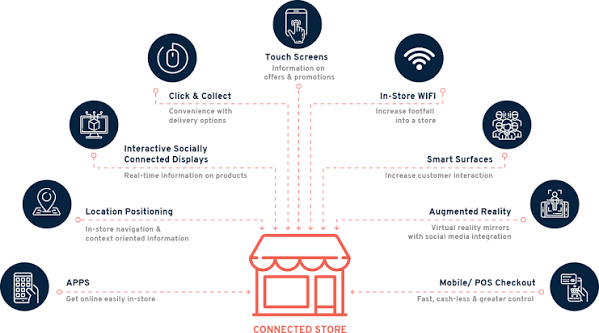
By Afla KC , Digital Marketing Executive
Introduction
The retail industry has undergone a remarkable transformation over the past decade. Changing consumer expectations, rapid technological advancements, and the growth of e-commerce have fundamentally reshaped how businesses operate and how customers shop. Today’s consumers expect seamless experiences, personalised recommendations, multiple payment options, real-time product availability, and fast delivery—all while enjoying consistent service across online and offline channels.
To meet these expectations, retailers are embracing digital solutions that streamline operations, improve customer experiences, and support long-term business growth. From cloud-based management systems and AI-powered analytics to automated inventory management and omnichannel commerce, technology has become the driving force behind modern retail success.
Digital transformation is no longer limited to large retail chains. Small and medium-sized businesses are also investing in digital tools to remain competitive, reduce operational costs, improve efficiency, and build stronger customer relationships. Retailers that successfully adopt digital solutions can respond more quickly to market trends, make data-driven decisions, and deliver the convenient shopping experiences that today’s customers demand.
In this guide, we’ll explore how digital solutions are transforming the retail industry, the technologies leading this evolution, their business benefits, implementation best practices, and what the future of retail looks like in an increasingly digital world.
What Are Digital Solutions in Retail?
Digital solutions refer to software, platforms, and technologies that help retailers improve business operations, customer engagement, inventory management, sales, and decision-making.
These solutions include:
- E-commerce platforms
- Point of Sale (POS) systems
- Customer Relationship Management (CRM) software
- Inventory management systems
- Artificial Intelligence (AI)
- Business analytics tools
- Cloud computing
- Mobile applications
- Payment gateways
- Marketing automation
- API integrations
- Business process automation
Together, these technologies create a connected retail ecosystem that improves efficiency and enhances the customer experience.
Why Digital Transformation Matters in Retail
Consumer behavior has changed significantly in recent years. Customers now expect retailers to provide:
- Fast and secure online shopping
- Personalized product recommendations
- Multiple payment options
- Real-time inventory availability
- Flexible delivery and pickup services
- Consistent experiences across channels
- Responsive customer support
Retailers that fail to meet these expectations risk losing customers to competitors that offer more convenient digital experiences.
Digital transformation helps businesses adapt to these changing demands while improving operational performance.
Key Digital Solutions Transforming Retail
1. E-Commerce Platforms
Online shopping has become an essential part of retail growth.
Modern e-commerce platforms enable businesses to:
- Sell products online
- Manage product catalogs
- Process secure payments
- Track customer orders
- Handle promotions and discounts
- Support multiple sales channels
A well-designed online store allows retailers to reach customers beyond their physical locations while generating additional revenue.
2. Cloud-Based Retail Management
Cloud technology enables retailers to manage operations from anywhere.
Cloud-based systems provide:
- Real-time business data
- Secure data storage
- Automatic software updates
- Multi-store management
- Remote access
- Improved collaboration
This flexibility supports business continuity and simplifies expansion.
3. AI-Powered Customer Experiences
Artificial Intelligence is helping retailers create smarter and more personalized shopping experiences.
AI can:
- Recommend products
- Analyze customer behavior
- Predict purchasing trends
- Automate customer support
- Personalize marketing campaigns
- Forecast demand
By understanding customer preferences, retailers can improve engagement and increase sales.
4. Inventory Management Systems
Manual inventory tracking often leads to stock shortages, overstocking, and operational inefficiencies.
Digital inventory systems help retailers:
- Track stock in real time
- Monitor product movement
- Automate stock replenishment
- Reduce inventory errors
- Improve warehouse efficiency
Better inventory control ensures products are available when customers need them.
5. Point of Sale (POS) Systems
Modern POS systems do much more than process payments.
They also help retailers:
- Manage inventory
- Track sales
- Generate reports
- Support loyalty programs
- Manage customer information
- Process returns efficiently
Integrated POS systems improve operational accuracy while enhancing the checkout experience.
6. Customer Relationship Management (CRM)
Building lasting customer relationships is essential for retail success.
CRM systems allow businesses to:
- Store customer information
- Track purchase history
- Manage loyalty programs
- Personalize communication
- Improve customer service
Stronger relationships often lead to higher customer retention and repeat purchases.
7. Omnichannel Retail
Today’s customers interact with businesses through multiple channels, including:
- Physical stores
- Websites
- Mobile apps
- Social media
- Online marketplaces
Omnichannel retail ensures customers receive a consistent experience regardless of how they choose to shop.
Examples include:
- Buy online, pick up in-store (BOPIS)
- Unified shopping carts
- Cross-channel loyalty programs
- Real-time inventory synchronization
This seamless experience increases customer satisfaction and sales.
8. Business Analytics and Reporting
Retailers generate vast amounts of data every day.
Business intelligence tools transform this data into actionable insights.
Retailers can analyze:
- Sales performance
- Customer behavior
- Product demand
- Marketing effectiveness
- Seasonal trends
- Inventory turnover
Data-driven decision-making helps businesses respond quickly to changing market conditions.
9. Marketing Automation
Marketing automation enables retailers to engage customers more effectively.
Businesses can automate:
- Email campaigns
- SMS notifications
- Product recommendations
- Abandoned cart reminders
- Loyalty rewards
- Promotional offers
Automation improves customer engagement while reducing manual marketing efforts.
10. API Integration
Retail businesses often use multiple software applications.
API integration connects systems such as:
- E-commerce platforms
- Inventory software
- Accounting systems
- CRM platforms
- Payment gateways
- Shipping providers
Integrated systems eliminate duplicate work, reduce errors, and improve operational efficiency.
Benefits of Digital Solutions in Retail
Retail businesses that embrace digital transformation often experience significant advantages.
Improved Customer Experience
Personalized recommendations, faster service, and convenient shopping journeys create happier and more loyal customers.
Increased Operational Efficiency
Automation reduces repetitive tasks, allowing employees to focus on customer service and business growth.
Better Decision-Making
Real-time analytics help retailers make informed decisions based on accurate business data.
Cost Savings
Automation, optimized inventory, and streamlined workflows reduce operational expenses.
Greater Scalability
Digital systems make it easier to expand into new markets, add product lines, or manage multiple locations without dramatically increasing complexity.
Challenges of Digital Transformation
While the benefits are substantial, retailers may face challenges during implementation.
Common challenges include:
- Integration with legacy systems
- Employee training
- Data security concerns
- Initial implementation costs
- Change management
Successful transfo
rmation requires careful planning, ongoing support, and a clear digital strategy.
Best Practices for Retail Digital Transformation
Retailers can maximize success by following these best practices:
Understand Customer Needs
Choose technologies that genuinely improve the customer experience rather than adopting trends without a cle
ar purpose.
Invest in Scalable Solutions
Select platforms that can grow alongside your business.
Prioritize Security
Protect customer data with secure payment systems, encryption, and regular software updates.
Train Employees
Ensure staff understand how to use new technologies effectively and confidently.
Monitor
Performance
Track key metrics such as:
- Sales growth
- Customer satisfaction
- Inventory accuracy
- Conversion rates
- Operational efficiency
Use insights to refine processes and improve results.
The Future of Retail Technology
Retail technology continues to evolve rapidly, bringing new opportunities for innovation.
Emerging trends include:
- AI-powered shopping assistants
- Predictive inventory management
- Voice commerce
- Augmented Reality (AR) product visualization
- Contactless shopping experiences
- Smart stores powered by IoT
- Personalized omnichannel experiences
- Advanced customer analytics
Retailers that embrace these innovations will be better positioned to meet future customer expectations and remain competitive.
Conclusion
Digital solutions are transforming the retail industry by enabling businesses to operate more efficiently, deliver exceptional customer experiences, and adapt quickly to changing market demands. Technologies such as e-commerce platforms, cloud-based systems, AI, CRM software, inventory management tools, and marketing automation are no longer optional—they have become essential components of a successful retail strategy.
By integrating these digital solutions, retailers can streamline operations, reduce costs, improve decision-making, and create seamless shopping experiences across every customer touchpoint. Whether serving customers in physical stores, online, or through mobile platforms, businesses that invest in digital transformation are better equipped to build loyalty, increase revenue, and scale sustainably.
As the retail landscape continues to evolve, companies that embrace innovation and place customer experience at the center of their digital strategy will be best positioned for long-term success. Digital transformation is not simply about adopting new technologies—it is about creating a smarter, more agile, and future-ready retail business that can thrive in an increasingly competitive marketplace.