
 Post by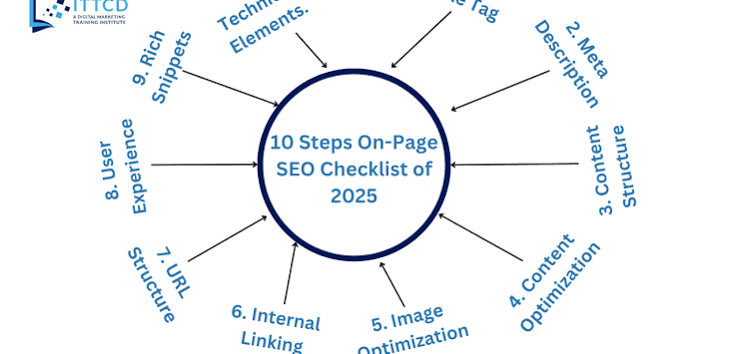
By Afla KC , Digital Marketing Executive
Introduction
Having a professional website is no longer enough to succeed online. No matter how visually appealing or feature-rich your website is, it won’t generate consistent traffic or leads if potential customers can’t find it on search engines. That’s where on-page SEO plays a critical role.
‘On-page SEO’ refers to the practice of optimising individual web pages so they rank higher in search engine results and provide a better experience for visitors. Unlike off-page SEO, which focuses on backlinks and external signals, on-page SEO is entirely within your control. It involves optimising your website’s content, structure, HTML elements, images, page speed, internal links, and user experience to help search engines understand your pages and deliver them to the right audience.
For business websites, effective on-page SEO is more than just ranking for keywords. It helps attract qualified visitors, improve user engagement, increase conversions, and build credibility with both search engines and potential customers. Whether you run a local business, an e-commerce store, a software company, or a service-based agency, following a structured on-page SEO checklist can significantly improve your website’s performance.
This guide covers the essential on-page SEO elements every business website should implement in 2026 to improve visibility, user experience, and long-term search engine rankings.
What Is On-Page SEO?
On-Page SEO is the process of optimizing the content and technical elements of individual web pages to make them more relevant and valuable for both users and search engines.
It includes:
- Keyword optimization
- Title tags
- Meta descriptions
- Headings
- URL structure
- Internal linking
- Image optimization
- Page speed
- Mobile responsiveness
- Content quality
- User experience
When these elements work together, search engines can better understand your content and rank it for relevant searches.
Why On-Page SEO Matters
A properly optimisedoptimising website offers several advantages:
- Higher search rankings
- Increased organic traffic
- Better user experience
- Improved click-through rates
- Lower bounce rates
- More qualified leads
- Higher conversion rates
- Stronger online credibility
Businesses that invest in On-Page SEO build a stronger digital foundation for long-term growth.
1. Conduct Keyword Research
Every page should target a primary keyword that aligns with user intent.
Examples include:
- Digital marketing agency
- CRM software
- Property management services
- Business automation solutions
Also include related keywords and natural variations throughout the content without overusing them.
Focus on answering the user’s search intent rather than simply repeating keywords.
2. Optimize the Page Title
The page title is one of the most important ranking factors.
A strong title should:
- Include the primary keyword
- Be clear and descriptive
- Stay within 50–60 characters
- Encourage users to click
Example:
Digital Marketing Services | Grow Your Business Online
Avoid duplicate titles across multiple pages.
3. Write Compelling Meta Descriptions
Although meta descriptions aren’t a direct ranking factor, they significantly influence click-through rates.
A good meta description should:
- Summarize the page
- Include the target keyword
- Stay between 150–160 characters
- Encourage action
Example:
“Discover professional digital marketing services that help businesses increase traffic, generate leads, and grow online.”
4. Use Proper Heading Structure
Headings improve readability and help search engines understand content hierarchy.
Use:
- One H1 heading per page
- H2 headings for major sections
- H3 headings for subsections
- Logical content organization
Avoid using headings purely for design purposes.
5. Create High-Quality Content
Content remains the foundation of SEO.
Your content should:
- Solve real customer problems
- Be original
- Provide practical value
- Include examples
- Answer common questions
- Stay updated regularly
Search engines increasingly reward content that demonstrates expertise, experience, authority, and trustworthiness.
6. Optimize URLs
Clean URLs improve both SEO and user experience.
Good example:
yourwebsite.com/on-page-seo-checklist
Poor example:
yourwebsite.com/page?id=4587&cat=12
Use short, descriptive URLs containing relevant keywords where appropriate.
7. Optimize Images
Images improve engagement but should also support SEO.
Best practices include:
- Compress image sizes
- Use descriptive file names
- Add meaningful alt text
- Choose modern image formats
- Enable lazy loading
Optimized images improve page speed and accessibility.
8. Improve Internal Linking
Internal links connect related pages across your website.
Benefits include:
- Helping search engines discover pages
- Distributing page authority
- Improving navigation
- Increasing time spent on site
Link naturally to relevant blogs, service pages, and case studies.
9. Add External Links to Trusted Sources
Where relevant, link to authoritative websites that provide additional value.
Examples include:
- Government resources
- Industry research
- Official documentation
- Academic studies
Quality external links can strengthen credibility and improve user experience.
10. Optimize for Mobile Devices
Most users browse websites on smartphones.
Ensure your website:
- Uses responsive design
- Has readable text
- Features touch-friendly navigation
- Loads quickly
- Displays correctly on all screen sizes
A poor mobile experience can negatively affect both rankings and conversions.
11. Improve Page Speed
Fast-loading websites create better user experiences and support SEO.
Improve speed by:
- Compressing images
- Using browser caching
- Minimizing JavaScript
- Optimizing CSS
- Using a reliable hosting provider
- Reducing unnecessary plugins
Aim for pages that load quickly on both desktop and mobile devices.
12. Add Clear Calls to Action
SEO brings visitors to your website—but conversions require clear direction.
Include calls to action such as:
- Contact us
- Request a quote
- Book a consultation
- Download our guide
- Learn more
- Get started today
Every page should guide visitors toward the next step.
13. Improve User Experience (UX)
Search engines reward websites that provide excellent user experiences.
Focus on:
- Clear navigation
- Logical page structure
- Easy readability
- White space
- Accessible design
- Consistent branding
Happy users are more likely to stay longer and engage with your content.
14. Add Schema Markup
Structured data helps search engines better understand your website.
Useful schema types include:
- Organization
- Local Business
- Service
- Product
- FAQ
- Review
- Article
Schema can improve visibility through rich search results.
15. Keep Content Fresh
Search engines prefer content that remains accurate and relevant.
Regularly update:
- Statistics
- Pricing
- Services
- Case studies
- Images
- Internal links
Refreshing older pages can improve rankings over time.
Common On-Page SEO Mistakes
Avoid these common errors:
- Keyword stuffing
- Duplicate content
- Missing title tags
- Poor-quality content
- Slow-loading pages
- Broken internal links
- Missing image alt text
- Weak calls to action
- Unoptimized mobile experience
Correcting these issues improves both SEO performance and user satisfaction.
Measuring On-Page SEO Success
Track key performance indicators such as:
- Organic traffic
- Keyword rankings
- Click-through rate (CTR)
- Bounce rate
- Average session duration
- Conversion rate
- Page load speed
- Indexed pages
Regular analysis helps identify areas for continuous improvement.
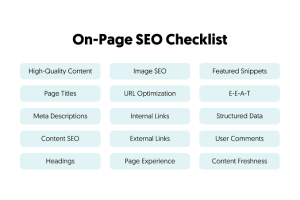
On-Page SEO Checklist
Before publishing any page, confirm that you have:
- Researched relevant keywords
- Written a unique title tag
- Added a compelling meta description
- Used one H1 heading
- Structured content with H2 and H3 headings
- Optimized images
- Included internal links
- Added relevant external links
- Optimized URLs
- Improved page speed
- Ensured mobile responsiveness
- Included a clear call to action
- Added schema markup where appropriate
- Proofread content for quality and accuracy
Following this checklist helps ensure every page is optimized for both users and search engines.
The Future of On-Page SEO
As search engines continue to evolve, On-Page SEO is becoming increasingly focused on user experience and content quality.
Emerging trends include:
- AI-assisted search experiences
- Voice search optimization
- Semantic search
- Helpful, people-first content
- Core Web Vitals improvements
- Rich results through structured data
- Personalised search experiences
Businesses that prioritise user value alongside technical optimisation will be best positioned for long-term success.