
 Post by
 By Afla KC , Digital Marketing Executive
Introduction
There are thousands of businesses offering similar products and services.
Many have good products. Many have talented teams. Many provide excellent customer service.
Yet only a few become truly memorable.
Why?
Because being good at what you do is not always enough. Customers need to understand who you are, what makes you different, and why they should choose you over the alternatives.
This is where brand positioning becomes important.
Brand positioning is not simply abou
t choosing a tagline or deciding what colours your brand should use. It is about creating a clear and distinctive place for your business in the minds of your target customers.
When positioning is strong, people can quickly understand what a brand represents.
When positioning is weak, even a great business can become forgettable.
So how does a brand move from being unknown to becoming unforgettable?
It starts with having a clear positioning strategy.
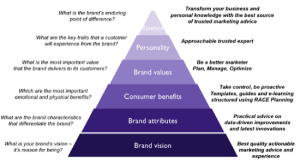
What Is Brand Positioning?
Brand positioning is the way a business intentionally defines how it wants to be perceived by its target audience compared with competitors.
In simple terms:
Brand positioning answers the question: “Why should customers remember and choose us?”
It connects several important elements:
Who you serve
What you offer
What problem you solve
What makes you different
What value you provide
What you want to be known for
For example, saying:
“We are a digital marketing agency.”
only tells people what you do.
But saying:
“We help growing businesses turn their digital presence into a consistent source of visibility and leads.”
communicates a clearer value proposition.
The second statement gives the audience a reason to understand the brand.
Why Strong Brand Positioning Matters
Without clear positioning, businesses often end up competing on the same things:
Price. Quality. Service. Offers.
These are important, but they are not always enough to create differentiation.
Strong positioning can help a business:
Build Recognition
People quickly understand what the brand represents.
Stand Out From Competitors
The business has a clear reason for being different.
Attract the Right Customers
Clear messaging naturally appeals to the audience that values the brand’s offering.
Build Trust
Consistency makes the business appear more credible.
Support Marketing
Content, advertising, website messaging, and social media become easier to plan.
Create Long-Term Brand Value
The brand becomes associated with a specific idea rather than simply a product.
The Difference Between Branding and Brand Positioning
Branding and positioning are connected, but they are not the same.
Brand positioning defines the place you want to occupy in the customer’s mind.
Branding is how you communicate and express that position.
For example:
Positioning:
“A premium skincare brand focused on simple, science-backed routines.”
Branding may then communicate this through:
Visual identity
Packaging
Website design
Tone of voice
Photography
Social media content
Advertising
Positioning comes first.
The creative expression supports it.
The Framework Behind Strong Brand Positioning
A strong positioning strategy can be built around several key elements.
1. Know Exactly Who You Want to Reach
The first step is defining your audience.
Many businesses say:
“Our product is for everyone.”
In reality, trying to appeal to everyone can make a brand less relevant to anyone.
Instead, identify:
Age group
Industry
Location
Buying behaviour
Needs
Problems
Motivations
Budget
Expectations
You don’t need to exclude everyone outside your target audience.
You simply need to know who you are primarily trying to serve.
2. Understand the Problem You Solve
Customers don’t buy products simply because they exist.
They buy solutions to problems.
Ask:
What problem does our customer have?
For a payroll company, the problem may be:
Manual payroll work
Calculation errors
Compliance complexity
Administrative workload
For a digital marketing company, it could be:
Low online visibility
Inconsistent content
Poor lead generation
Weak brand awareness
Understanding the problem allows you to position the business around customer value rather than company features.
3. Identify Your Real Competitors
Your competitors aren’t always the businesses selling exactly the same product.
Your customer may be choosing between:
Your product
A competitor
A cheaper alternative
A premium alternative
Doing it themselves
Doing nothing
Understanding these alternatives gives you a clearer picture of the competitive landscape.
Research:
Competitor positioning
Pricing
Messaging
Customer reviews
Social media
Website communication
Strengths
Weaknesses
The goal isn’t to copy competitors.
It is to identify opportunities to differentiate.
4. Find Your Point of Difference
Once you understand your competitors, ask:
“What can we own?”
Your difference could be based on:
Expertise
Convenience
Speed
Specialisation
Experience
Technology
Customer service
Personalisation
Sustainability
Innovation
Price
Community
But be careful.
Simply claiming:
“We provide the best quality.”
is not strong positioning.
Your differentiation should be specific and meaningful.
Instead of:
“Best service.”
consider:
“Specialised HR support for growing businesses that need structure without building a large internal HR team.”
Specificity makes positioning stronger.
5. Define Your Value Proposition
Your value proposition should explain:
Who you help + what you help them achieve + why your approach is different.
A useful structure is:
We help [target audience] achieve [desired outcome] through [unique approach].
For example:
“We help small businesses simplify their HR operations through practical, technology-enabled HR solutions.”
This gives customers a clearer understanding of the brand.
6. Choose What You Want to Be Known For
Strong brands often own a particular idea in the customer’s mind.
Think:
Google → Search
Volvo → Safety
Nike → Athletic performance and motivation
The objective isn’t to copy these brands.
It is to identify your own association.
Ask:
“If someone mentions our business, what is the one thing we want people to think about?”
That idea can become the foundation of your positioning.
7. Build a Distinct Brand Personality
Brands are not only understood through information.
They are also experienced through personality.
Your brand could be:
Professional
Friendly
Bold
Premium
Approachable
Innovative
Minimal
Energetic
Trustworthy
Educational
The personality should reflect your audience and positioning.
A financial advisory brand and a youth fashion brand should not necessarily communicate in the same way.
A distinct personality makes the brand feel more human and recognisable.
8. Turn Positioning Into Messaging
Positioning becomes powerful when it appears consistently in communication.
Your positioning should influence:
Website
Your homepage should quickly communicate who you serve and what you offer.
Social Media
Your content should reinforce your expertise and personality.
Advertising
Your ads should communicate a clear benefit rather than generic promotional claims.
Content Marketing
Your blogs and videos should demonstrate knowledge around your positioning.
Sales Communication
Your sales team should communicate the same value proposition.
Consistency across these touchpoints strengthens recognition.
9. Build Content Around Your Positioning
Content is one of the most effective ways to reinforce positioning.
Suppose a brand wants to be known as an expert in business automation.
Its content could cover:
Processes businesses should automate
Automation mistakes
Productivity strategies
AI tools
Workflow optimisation
Business efficiency
Cost reduction
Case studies
Over time, customers begin associating the brand with automation expertise.
This is how content can contribute to brand positioning.
10. Make Your Positioning Visible
Your positioning should not exist only in a strategy document.
Customers should be able to see it.
For example, if your positioning is premium, your:
Website
Photography
Packaging
Customer service
Social media
Sales experience
should support that perception.
If your positioning is affordable and accessible, the experience should communicate simplicity and value.
There must be alignment between:
What you claim → What you show → What you deliver
The Role of Customer Experience
One of the most overlooked parts of positioning is customer experience.
A brand can position itself as:
“The easiest company to work with.”
But if customers experience:
Complicated onboarding
Slow responses
Confusing invoices
Difficult support
the positioning loses credibility.
Your customer experience should prove your brand promise.
Positioning creates expectations. Experience confirms them.
Don’t Try to Be Everything
A common positioning mistake is trying to communicate every strength at once.
A company may say:
Affordable + Premium + Fast + Personalised + Innovative + Traditional + Expert
The result can be confusing.
Strong brands make choices.
They decide what matters most.
Being known for one strong idea is often more powerful than being vaguely associated with ten different ideas.
Positioning Is Not About Being Completely Unique
Businesses sometimes believe:
“Our positioning has to be something nobody else has ever done.”
Not necessarily.
You don’t need an idea that has never existed.
You need a relevant and credible difference that matters to your target audience.
For example, many businesses may offer convenience.
But a company can position itself around convenience for a particular audience or situation.
The strength comes from the combination of:
Audience + Problem + Solution + Difference
Common Brand Positioning Mistakes
Being Too Generic
“Quality products and excellent service” doesn’t differentiate most businesses.
Copying Competitors
Following another brand’s positioning can make you look like a weaker version of them.
Changing Positioning Too Often
Customers need consistency to build associations.
Focusing Only on Visuals
A beautiful identity cannot compensate for unclear positioning.
Making Promises You Can’t Deliver
Your positioning must be supported by the actual customer experience.
Targeting Everyone
A broad audience often produces broad and forgettable messaging.
Ignoring Customer Perception
Your intended positioning and actual market perception may be different.
How to Test Your Brand Positioning
Before finalising your positioning, ask:
Is It Clear?
Can someone understand what you do quickly?
Is It Relevant?
Does it address something your target audience actually cares about?
Is It Different?
Does it distinguish you from meaningful alternatives?
Is It Credible?
Can you prove the promise?
Is It Consistent?
Can it work across your website, content, advertising, and customer experience?
Is It Memorable?
Can customers easily associate your business with the idea?
If the answer to these questions is yes, your positioning has a strong foundation.
From Unknown to Unforgettable
Becoming memorable doesn’t happen because a business suddenly creates a viral post or redesigns its logo.
It happens through repeated, consistent association.
The process looks something like this:
Visibility → Recognition → Relevance → Trust → Preference → Loyalty
First, people need to discover you.
Then they need to recognise you.
Then they need to understand why you’re relevant.
Then they need reasons to trust you.
Eventually, your brand can become one of their preferred choices.
This is the real journey from unknown to unforgettable.
A Practical Brand Positioning Checklist
Before launching or repositioning a brand, make sure you can answer:
Who are we serving?
What problem are we solving?
What makes our solution valuable?
Who are our competitors?
What alternatives do customers have?
What makes us different?
What do we want to be known for?
What should customers feel when they interact with us?
Does our visual identity support our positioning?
Does our content reinforce the same message?
Does our customer experience deliver the promise?
If these answers are unclear, the brand may need stronger positioning before investing heavily in marketing.
Conclusion
A business doesn’t become memorable simply by being visible.
It becomes memorable when people can clearly associate it with something valuable and distinctive.
That’s the power of brand positioning.
Strong positioning helps businesses move beyond generic claims and communicate a clear reason to choose them.
It tells customers:
Who you are.
Who you serve.
What you solve.
Why you’re different.
Why they should care.
In a crowded market, customers have more choices than ever.
You cannot always control how many competitors enter your market.
But you can control how clearly your brand communicates its value.
The goal isn’t to become everything to everyone.
The goal is to become the right choice for the right people—and to be remembered for the right reason.
Because great brands aren’t simply recognised.
They occupy a place in people’s minds.
And strong brand positioning is what helps you earn that place.