
 Post by
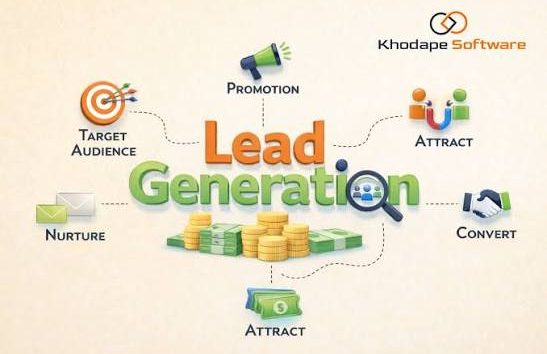
Generating leads is one of the main goals of digital marketing. Businesses invest in Google Ads, Meta Ads, SEO and social media campaigns to attract potential customers. But what happens when enquiries keep coming in, while actual sales remain low?
This is a common challenge for many businesses. Their campaigns generate clicks, form submissions, WhatsApp messages and phone calls, but only a small percentage of those enquiries turn into paying customers.
The problem may not be the number of leads. It could be the quality of those leads, the marketing message, the follow-up process or the way the business handles potential customers.
Let’s understand why digital marketing generates leads but not sales, and what businesses can do to improve conversions.
1. You Are Attracting the Wrong Audience
Not every person who clicks on your advertisement is ready to purchase your product or service.
Sometimes, campaigns attract people who are simply curious, looking for information or comparing prices. These enquiries may increase your lead count but contribute very little to actual revenue.
For example, a company offering premium interior design services may receive enquiries from people looking only for low-cost solutions.
This usually happens when targeting is too broad or the campaign message does not clearly communicate the offer.
How to improve it:
Define your ideal customer before launching campaigns.
Target people based on relevant interests, location and buying behaviour.
Use clear messaging about your product, service and pricing range.
Avoid attracting enquiries through misleading or overly generic offers.
Review lead quality regularly instead of focusing only on lead volume.
The objective should be to attract potential customers who have a genuine need for your offering.
2. Your Advertisement Creates the Wrong Expectations
Your advertisement is often the first interaction a customer has with your business.
If your ad promises something that your actual product or service does not deliver, customers may lose interest after contacting you.
For example, an advertisement promoting extremely low prices may attract a large number of enquiries. But if the actual service costs significantly more, many leads may disappear after receiving the quotation.
This creates a gap between what customers expect and what your business offers.
How to improve it:
Keep your ad message aligned with your actual service.
Communicate important conditions clearly.
Use realistic offers and pricing information.
Show the actual value customers receive.
Make sure your landing page matches the advertisement.
Good marketing should create interest while setting the right expectations.
3. Your Business Is Not Following Up Quickly
Getting a lead is only the beginning of the sales process.
When someone fills out a form, sends a WhatsApp message or requests a callback, they are showing interest in your business.
But if your team takes too long to respond, that potential customer may contact another company.
In competitive industries, delayed responses can cost businesses valuable opportunities.
How to improve it:
Respond to enquiries as quickly as possible.
Assign incoming leads to a responsible team member.
Use automated WhatsApp acknowledgements.
Set reminders for pending follow-ups.
Maintain a proper record of every enquiry.
Automation can help businesses manage incoming enquiries, but personal communication is still important when customers are ready to make a decision.
4. Your Sales Team Is Not Converting the Leads
Sometimes, the marketing campaign is performing well, but the sales process needs improvement.
A lead may have genuine interest in your service, but poor communication, unclear explanations or weak sales handling can prevent the conversion.
For example, if a customer asks about a service and receives only a price quotation without understanding the benefits, they may choose a competitor who explains the value more effectively.
How to improve it:
Train your sales team to understand customer requirements.
Focus on solving customer problems instead of simply selling.
Explain the benefits and value of your offering.
Handle customer objections professionally.
Follow up with interested customers at the right time.
Marketing brings potential customers to your business. Your sales team helps turn that interest into revenue.
5. You Are Not Building Enough Trust
Customers rarely make purchasing decisions based only on advertisements.
Before choosing a business, they often look for proof that the company is reliable and capable of delivering what it promises.
If your digital presence does not establish trust, potential customers may hesitate to take the next step.
Some common reasons include:
Limited customer reviews.
No genuine testimonials.
Poor-quality website or social media presence.
Lack of product or service demonstrations.
Unclear business information.
No visible examples of previous work.
How to improve it:
Build trust through content that shows the real value of your business.
You can use:
Genuine customer testimonials.
Client experience videos.
Before-and-after results, where relevant.
Behind-the-scenes content.
Product and service demonstrations.
Case studies and project highlights.
Helpful educational content.
People are more confident when they understand what they are investing in and see evidence of the value.
6. Your Website or Landing Page Is Not Designed for Conversion
Your advertisements may be generating traffic, but what happens when visitors reach your website?
If the website is confusing, slow or difficult to navigate, potential customers may leave without contacting you.
A website should not simply provide information. It should guide visitors towards taking the next step.
How to improve it:
Make sure your website includes:
A clear headline explaining your service.
Simple and easy-to-understand content.
Strong calls to action.
Visible contact details.
Customer reviews and testimonials.
Mobile-friendly design.
Easy enquiry forms and WhatsApp contact options.
Every page should make it clear what the visitor should do next.
7. You Are Not Tracking the Right Marketing Metrics
Many businesses measure digital marketing performance based only on the number of leads generated.
However, lead volume alone does not indicate business growth.
A campaign generating 100 enquiries with only two sales may be less effective than a campaign generating 30 enquiries with ten sales.
Businesses need to understand what happens after a lead enters the sales process.
Important metrics to track include:
MetricWhat it tells youCost Per Lead (CPL)How much you spend to generate one leadLead QualityHow relevant the enquiries areLead-to-Sale Conversion RateHow many leads become customersCost Per Acquisition (CPA)How much it costs to acquire one customerReturn on Ad Spend (ROAS)Revenue generated compared with advertising spendFollow-up RateHow consistently leads are contacted
Tracking these metrics helps identify whether the problem is in marketing, lead quality or sales.
8. You Are Ignoring Follow-Up and Remarketing
Not every customer makes a purchase during their first interaction with a business.
Some need more information. Others may compare different providers, discuss the decision with family or wait for the right time.
If your business stops communicating after the first enquiry, you may lose customers who were genuinely interested.
How to improve it:
Follow up with interested leads.
Share relevant information about your products or services.
Use remarketing campaigns to reconnect with website visitors.
Create educational content that answers common questions.
Share testimonials and customer experiences.
Maintain regular but non-intrusive communication.
A consistent follow-up strategy helps keep your business in consideration when customers are ready to buy.
How to Turn More Digital Marketing Leads into Sales
Generating leads and converting them into customers should work as one connected process.
Here is a simple framework businesses can follow:
StageWhat your business should focus onAwarenessReach the right target audienceInterestCreate relevant and engaging contentLead GenerationMake it easy for customers to enquireQualificationIdentify genuine potential customersFollow-upRespond quickly and consistentlyConversionCommunicate value and address objectionsRetentionBuild long-term customer relationships
When every stage works together, digital marketing becomes more than a lead-generation activity. It becomes a system that supports business growth.
Final Thoughts
If your digital marketing generates leads but not sales, increasing your advertising budget may not be the first solution.
Start by understanding the quality of your leads, the expectations created by your advertisements, your response time and your sales process.
The real objective is not to generate more enquiries. It is to attract the right people, build their trust and help them make a purchasing decision.
At Level Up Digital Solutions, we help businesses build connected digital marketing strategies through social media marketing, performance marketing, content creation, website development and marketing automation.
Because successful digital marketing is not just about getting leads. It’s about turning the right opportunities into business growth.
SEO Keywords
Primary Keyword: Digital marketing generates leads but not sales
Secondary Keywords:
Why leads are not converting into sales
How to convert digital marketing leads into customers
Lead generation vs sales conversion
Improve lead conversion rate
Digital marketing strategy for business growth
How to increase sales through digital marketing
Suggested SEO Title: Why Your Digital Marketing Generates Leads but Not Sales
Meta Description: Getting leads but no sales? Discover the common reasons digital marketing leads fail to convert and how businesses can improve lead quality, follow-ups and sales conversions.
URL Slug: digital-marketing-leads-but-no-sales