
 Post by
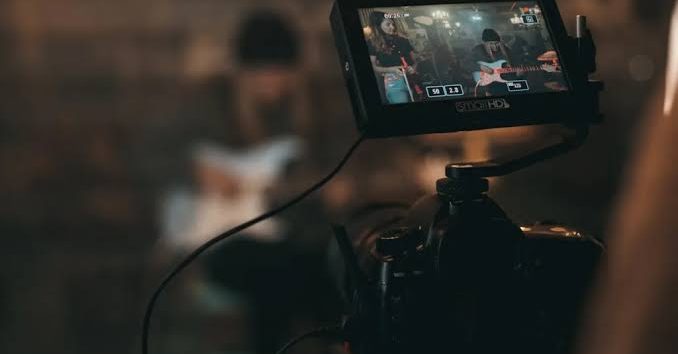
When people see a high-quality brand video, they often assume the answer is simple:
“They must have used an expensive camera.”
A cinema camera. Expensive lenses. Professional lighting. A large production crew.
But here’s the reality:
An expensive camera can capture a bad idea beautifully.
What makes a video feel premium is rarely one piece of equipment.
It is the combination of strategy, storytelling, lighting, composition, sound, production design, direction and editing.
In other words:
Premium video is more about how you use the tools than how much the tools cost.
The Camera Is Only One Part of the Equation
Two production teams can use similar cameras and produce completely different results.
Why?
Because the camera doesn’t decide:
What the audience sees
Where the subject stands
How the scene is lit
What the viewer should feel
How the story unfolds
When the music changes
Where the video cuts
What the audience remembers
Those decisions come from the creative and production strategy.
A better camera can improve image quality.
But better decisions improve the entire video.
1. The Concept Comes Before the Camera
Before production begins, there should be a clear answer to:
“Why are we making this video?”
A premium brand video starts with a strong concept.
The concept determines:
The visual direction
The storytelling style
The location
The talent
The script
The shots
The pacing
The sound
The editing style
Without a strong concept, production can become a collection of beautiful shots without a meaningful story.
A strong concept makes every frame intentional.
2. Lighting Can Make a Bigger Difference Than the Camera
One of the biggest differences between amateur and professional-looking video is often lighting.
Good lighting creates:
Depth
Dimension
Contrast
Separation
Mood
Visual focus
It can make an ordinary location feel cinematic.
And it can make an expensive location look flat if handled poorly.
Professional production doesn’t simply ask:
“Is the scene bright enough?”
It asks:
“What should the audience feel when they see this scene?”
Warm, soft lighting can create comfort.
Harder directional light can create drama.
Controlled contrast can create a premium cinematic feel.
Lighting isn’t just about visibility. It’s about visual storytelling.
3. Composition Makes the Frame Feel Intentional
A premium video rarely feels accidental.
The subject is positioned with purpose.
The background supports the story.
The visual elements have hierarchy.
The frame has balance.
This is where composition becomes important.
Consider:
Rule of thirds
Leading lines
Negative space
Foreground elements
Depth
Symmetry
Framing
Camera perspective
A simple office can look visually impressive when composed well.
A beautiful location can look ordinary when everything is randomly placed.
Good composition turns a shot into a visual statement.
4. Production Design Changes Perception
Look carefully at premium advertisements and brand films.
You’ll notice that almost nothing is completely random.
The:
Furniture
Props
Wardrobe
Background
Colours
Textures
Locations
Product placement
all contribute to the visual story.
This is production design.
For example, a premium skincare brand may use:
Minimal backgrounds
Carefully selected textures
Controlled product placement
Elegant props
Clean compositions
A technology brand may use:
Modern environments
Geometric forms
Controlled lighting
Clean surfaces
The environment communicates before the dialogue does.
5. Camera Movement Should Have a Purpose
More camera movement doesn’t automatically mean more cinematic quality.
Sometimes the most premium shot is completely still.
Other times, a slow push-in can create intimacy.
A tracking shot can create energy.
A handheld shot can create realism.
A smooth reveal can create anticipation.
The question isn’t:
“Can we move the camera?”
It’s:
“Why should the camera move here?”
Intentional movement feels cinematic. Random movement feels distracting.
6. Lenses Shape the Visual Language
The lens you choose can dramatically influence how a scene feels.
Different focal lengths affect:
Perspective
Depth
Subject-background relationship
Distortion
Compression
Sense of space
A wide lens can make a location feel expansive.
A longer lens can compress the background and isolate the subject.
A close-up can create intimacy.
The goal isn’t to use the most expensive lens.
It’s to choose the lens that supports the story.
7. Sound Is One of the Most Underrated Elements
Here’s something many businesses overlook:
People can forgive an average-looking shot.
They are much less forgiving of bad audio.
Professional sound design can dramatically improve perceived production quality.
Think about:
Clean dialogue
Ambient sound
Foley
Music
Transitions
Silence
Sound effects
Voice-over
Imagine a product video where the visuals are beautiful but the voice-over has background noise.
The entire production immediately feels less professional.
Now imagine the same visuals with:
Clean dialogue + carefully selected music + subtle sound design.
The perception changes.
Great video isn’t only something you see. It’s something you hear.
8. Colour Grading Creates Consistency
Shooting isn’t the end of the visual process.
Post-production can shape the final look through:
Exposure adjustments
White balance
Contrast
Colour correction
Colour grading
Skin tone consistency
Colour grading shouldn’t simply make footage “more colourful.”
It should support the brand’s visual identity and the mood of the story.
A premium look often comes from consistency, not excessive effects.
Good grading makes different shots feel like they belong to the same world.
9. Editing Controls the Experience
You can shoot incredible footage and still create a poor video.
Why?
Editing.
Editing determines:
What the audience sees first
How long they see it
When information is revealed
Where attention shifts
When the story accelerates
When it slows down
When the emotional payoff happens
A great editor doesn’t simply cut clips together.
They create rhythm.
For short-form content, this can be especially important.
Every cut should contribute to:
Attention → Understanding → Emotion → Action
10. Typography and Graphics Matter
In brand videos, text is often unavoidable.
Titles.
Subtitles.
Statistics.
Product information.
Calls to action.
Names.
Prices.
Features.
Poor typography can make a professionally shot video feel amateur.
A premium motion-graphics system considers:
Font selection
Size
Spacing
Placement
Animation
Timing
Brand consistency
Design doesn’t stop when the camera stops.
11. Direction Brings Everything Together
This is perhaps one of the biggest differences between an ordinary video and a premium production.
Someone needs to make decisions across the entire production:
How should the talent perform?
Where should they look?
How should the camera move?
What should be happening in the background?
When should the music change?
Which shot should come next?
That’s direction.
A director connects:
Concept → Performance → Camera → Lighting → Production Design → Editing
Without that connection, individual departments can do good work without producing a cohesive final experience.
12. Story Is More Valuable Than Equipment
Imagine two videos.
Video A
Shot on a very expensive cinema camera.
Beautiful resolution.
Expensive location.
But:
Weak script
No clear message
No emotional connection
Poor pacing
Video B
Shot with a modest production setup.
But:
Strong concept
Clear story
Excellent lighting
Great performance
Strong sound
Intentional editing
Which one will people remember?
Probably Video B.
Because people don’t connect with resolution.
They connect with meaning.
The “Premium” Feeling Is Created by Details
A video feels expensive when many small decisions feel intentional.
For example:
The background is clean.
The lighting has depth.
The subject is framed well.
The movement is controlled.
The audio is clear.
The music fits the emotion.
The colours are consistent.
The typography is refined.
The edit has rhythm.
The story has purpose.
No single element created the premium feeling.
The details worked together.
Expensive Production vs Strategic Production
There’s an important distinction between the two.
Expensive Production
May involve:
High-end equipment
Large crew
Premium locations
Complex setups
Bigger budgets
Strategic Production
Focuses on:
Clear objectives
Strong concept
Audience understanding
Intentional visuals
Efficient production
Storytelling
Brand consistency
Smart distribution
The best productions combine both when the project requires it.
But budget alone doesn’t create quality.
Where Should Businesses Actually Invest?
If your goal is to create stronger brand videos, don’t automatically put the entire budget into equipment.
Consider investing in:
1. Pre-Production
Concept, research, scripting and planning.
2. Creative Direction
A clear visual and storytelling vision.
3. Lighting
Often one of the highest-impact production improvements.
4. Sound
Professional audio recording and sound design.
5. Production Design
Locations, props, wardrobe and environment.
6. Skilled Crew
People who know how to turn the plan into reality.
7. Post-Production
Editing, colour, graphics and sound.
8. Distribution
Making sure the finished video reaches the right audience.
The goal isn’t to spend more. It’s to spend intelligently.
The Best Camera Is the Right Camera
This doesn’t mean cameras don’t matter.
They absolutely do.
The right equipment can provide:
Better dynamic range
Better low-light performance
Higher resolution
Greater flexibility
Better colour information
Professional lens options
But the equipment should match the production requirement.
A social media reel may not require the same setup as a national television commercial.
A corporate interview may need different equipment from a cinematic brand film.
A product advertisement may require specialized macro or motion setups.
Equipment should serve the production—not define it.
A Premium Video Starts Before Shoot Day
One of the biggest secrets of professional production is that much of the quality is created before the camera is even switched on.
Through:
Research
↓
Concept
↓
Script
↓
Storyboard
↓
Shot List
↓
Location Planning
↓
Lighting Plan
↓
Production Design
↓
Shoot
↓
Edit
↓
Colour + Sound
↓
Distribution
The better the preparation, the fewer problems you’ll face on set.
Good pre-production saves time, money and creative compromises.
The LEVELUP DTS Perspective
At LEVELUP DTS, we believe video production shouldn’t begin with:
“Which camera are we using?”
It should begin with:
“What are we trying to communicate?”
Because a successful brand video needs more than technical quality.
It needs:
Strategy.
Story.
Creative direction.
Production quality.
Brand consistency.
Distribution.
Purpose.
When these elements work together, even a simple production can feel remarkably premium.
Final Thought
A high-end camera can give you beautiful footage.
But beautiful footage isn’t automatically a great brand video.
The real difference comes from the decisions behind the frame:
What you show.
How you light it.
How you frame it.
What you say.
What you don’t say.
What the audience hears.
How you edit it.
And why the video exists in the first place.
So the next time you see a video that feels incredibly expensive, don’t just look at the camera.
Look at everything around it.
Because premium isn’t always about the equipment.
It’s about the execution.
LEVELUP DTS
Strategy-led. Story-driven. Production-focused.