
 Post by
 By Afla KC , Digital Marketing Executive
Introduction
For years, businesses have treated Google rankings as one of the most important measures of online visibility.
The goal was straightforward:
Choose the right keywords → optimise your website → build authority → rank higher → attract clicks.
But search behaviour is changing.
People are increasingly using AI-powered search and conversational tools to discover information, compare products, research businesses, and find answers.
Instead of searching through multiple links, users may simply ask an AI platform:
“What are the best digital marketing agencies for small businesses?”
“Which HR solutions can help a growing company manage payroll?”
“What should I consider before choosing a CRM?”
The answer may contain a small selection of b
usinesses, products, sources, or recommendations.
This creates a new challenge for brands.
It is no longer enough to ask:
“Are we ranking on Google?”
Businesses also need to ask:
“Is our brand visible when customers search through AI?”
This shift doesn’t mean tra
ditional SEO is dead.
It means SEO is becoming part of a much broader visibility strategy.
What Is AI Search?
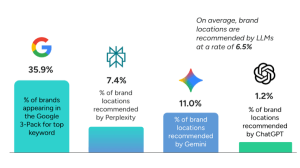
AI search refers to search experiences that use artificial intelligence to understand questions, summarise information, and provide direct answers rather than simply displaying a traditional list of links.
These experiences can appear through AI-powered search engines, conversational assistants, and other generative search interfaces.
Instead of forcing users to visit several websites to research a topic, AI can synthesise information from multiple sources.
This changes the customer journey.
Traditional search often looks like:
Search → Results → Website → Research → Decision
AI-assisted search can look more like:
Question → AI-generated answer → Sources/Recommendations → Decision
For brands, this creates a new visibility opportunity—and a new challenge.
Why Google Rankings Alone Are No Longer Enough
Google remains extremely important for online discovery.
However, relying exclusively on traditional rankings can create a narrow view of digital visibility.
Imagine that your website ranks highly for an important keyword.
That’s valuable.
But what happens when a potential customer asks an AI platform the same question?
If your brand isn’t mentioned, cited, recommended, or represented accurately, you may still be invisible during that part of the decision-making process.
This means brands need to think beyond:
“Where do we rank?”
and start thinking about:
“Where does our brand appear across the customer’s entire discovery journey?”
1. Build Strong Topical Authority
AI systems need reliable information to understand businesses and topics.
One way brands can strengthen their digital presence is by consistently publishing useful, relevant information around their area of expertise.
For example, a payroll services company shouldn’t only publish:
“We provide payroll services.”
It could create useful content around:
Payroll management
Payroll compliance
Salary processing
Employee deductions
Payroll challenges
HR documentation
Payroll outsourcing
Common payroll mistakes
Over time, this creates a stronger body of information associated with the business.
The objective is not to publish hundreds of random articles.
It is to develop depth around relevant topics.
2. Create Content That Answers Real Questions
AI search is heavily influenced by questions.
Users don’t always search with short keywords.
They may ask complete questions such as:
“How can a small business reduce payroll errors?”
“What are the benefits of outsourcing payroll?”
“How much does digital marketing cost for a small business?”
Brands should therefore create content that directly answers real customer questions.
A useful structure is:
Question
What is the customer trying to understand?
Direct Answer
Give a clear response early.
Explanation
Provide context and details.
Examples
Make the concept easier to understand.
Practical Advice
Help the reader take action.
This structure can benefit both traditional search users and AI-driven discovery.
3. Strengthen Your Website as a Source of Truth
Your website should clearly communicate what your business does.
Important information should not be hidden behind vague marketing language.
Clearly explain:
Products
Services
Industries served
Locations
Expertise
Team
Contact information
Experience
Case studies
Customer results
Frequently asked questions
For example, instead of saying:
“We offer innovative business solutions.”
explain exactly what those solutions are.
Clear information makes it easier for customers—and potentially AI systems—to understand your business.
4. Develop a Strong Brand Entity
Traditional SEO often focuses heavily on pages and keywords.
AI-driven discovery also requires businesses to think about brand identity and entity recognition.
An entity is essentially a clearly identifiable person, company, organisation, place, product, or concept.
Your business should have consistent information across the web.
That includes:
Business name
Website
Business description
Services
Location
Industry
Leadership
Contact details
Consistency helps reduce confusion.
If your business is described differently across multiple platforms, it becomes harder for both people and machines to understand exactly who you are.
5. Earn Mentions Beyond Your Own Website
A business saying:
“We are experts.”
is not as powerful as independent sources demonstrating that expertise.
Third-party mentions can strengthen your online presence.
These may include:
Industry publications
News websites
Business directories
Professional associations
Interviews
Podcasts
Guest articles
Reviews
Customer testimonials
Relevant industry websites
The objective should not be collecting random links.
It should be building a credible digital footprint.
6. Reviews Matter More Than Many Businesses Realise
Reviews are valuable for local businesses and customer decision-making.
When someone researches a company, they may look at:
Google reviews
Industry platforms
Customer testimonials
Social media feedback
Community discussions
A consistent pattern of positive customer experiences can strengthen trust.
Businesses should therefore make it easy for satisfied customers to leave genuine feedback.
However, reviews should never be manipulated or fabricated.
Authenticity matters.
7. Optimise for Local AI Discovery
Local businesses have another important opportunity.
A customer may ask:
“What’s a good digital marketing agency in Kochi?”
or:
“Which HR consultant can help a growing business in Kerala?”
The business needs to be clearly associated with its location.
Make sure your digital presence consistently communicates:
Business location
Service areas
Contact information
Business category
Local expertise
Relevant local content
Your Google Business Profile and other legitimate business listings should also contain accurate information.
Local SEO remains important because AI-driven discovery still needs reliable local information.
8. Use AEO Alongside SEO
This is where Answer Engine Optimisation (AEO) becomes relevant.
Traditional SEO often focuses on helping pages rank for searches.
AEO focuses more directly on making content useful for answer-based search experiences.
AEO-friendly content often includes:
Clear questions
Direct answers
Structured information
Definitions
FAQs
Step-by-step explanations
Comparison content
For example:
Instead of writing a long article that takes several paragraphs to answer:
“What is payroll outsourcing?”
Give the definition clearly first.
Then provide supporting information.
This helps users understand the answer quickly.
9. Think About GEO
Another term increasingly used in this area is Generative Engine Optimisation (GEO).
GEO refers broadly to strategies designed to improve a brand’s visibility within generative AI responses.
The exact mechanisms behind AI-generated answers vary across platforms and continue to evolve.
That means businesses should avoid treating GEO as a guaranteed ranking formula.
Instead, focus on fundamentals:
Be useful. Be clear. Be credible. Be relevant. Be consistently represented online.
These principles are more sustainable than chasing every new AI optimisation tactic.
10. Create Content Worth Referencing
AI platforms need information to generate useful answers.
If your website simply repeats generic statements found everywhere else, it provides little reason for others to reference it.
Original information can be more valuable.
Consider publishing:
Original research
Industry insights
Case studies
Expert opinions
Surveys
Data analysis
Practical frameworks
Detailed guides
Real examples
For example, instead of publishing:
“Social media marketing is important for businesses.”
create a detailed analysis of:
“How local businesses can turn Instagram engagement into qualified enquiries.”
Specificity creates value.
11. Build Expertise Through People
A brand’s expertise isn’t only communicated through company pages.
The people behind the company can also contribute.
Founders, executives, specialists, and employees can share:
Industry insights
Opinions
Case studies
Lessons learned
Educational content
Professional experiences
This can strengthen the association between the people, the company, and the subject they specialise in.
Personal expertise can contribute to overall brand credibility.
12. Don’t Abandon Traditional SEO
The rise of AI search doesn’t mean businesses should stop investing in SEO.
In fact, strong SEO fundamentals remain important.
Continue focusing on:
Technical SEO
Helpful content
Keyword research
Search intent
Internal linking
Website performance
Mobile usability
Structured data where appropriate
Quality backlinks and mentions
Local SEO
AI visibility should be treated as an extension of a strong digital presence—not a replacement for it.
13. Think Beyond Keywords
One of the biggest mindset changes is moving from keyword thinking to topic thinking.
Instead of creating ten unrelated pages for ten keywords, build a content ecosystem around a meaningful subject.
For example, a digital solutions company could build authority around:
Business Automation
with content covering:
What business automation means
Processes businesses should automate
Automation tools
Automation ROI
AI automation
Workflow automation
Common automation mistakes
Automation case studies
This creates depth.
Search engines and AI systems can better understand the relationship between the topics.
14. Make Your Content Easy to Understand
Complex writing doesn’t automatically demonstrate expertise.
In many cases, clear writing is more valuable.
Use:
Descriptive headings
Short paragraphs
Lists
Examples
Definitions
Tables where useful
Clear explanations
Avoid unnecessary jargon.
If a customer can understand your content quickly, you’ve already improved the user experience.
15. Keep Your Information Consistent
Imagine your website says:
“We have been serving businesses since 2015.”
But another platform says:
“Serving businesses since 2018.”
Or one page describes your company as a:
“Digital marketing agency,”
while another calls you a:
“Software development company.”
Inconsistent information can create confusion.
Regularly review your online presence and make sure important business information is accurate.
16. Create a Brand That People Search For
There is a difference between:
Being found for a keyword
and
Being searched by name.
The strongest brands eventually generate branded searches.
People stop asking:
“Which company provides this service?”
and start asking:
“What does [Brand Name] offer?”
This is a major sign of brand recognition.
SEO can help you get discovered.
Brand building can make people actively look for you.
You need both.
17. Measure Visibility Beyond Rankings
Traditional SEO reporting often focuses on:
Keyword rankings
Organic traffic
Clicks
Impressions
These remain useful.
But brands should increasingly consider broader visibility signals.
Track:
Branded searches
Direct traffic
Organic mentions
Referral traffic
Reviews
Content engagement
Leads
Conversions
Search visibility
Brand mentions across relevant platforms
The goal is not simply to rank.
It is to become easier to discover and trust.
A Modern Search Visibility Framework
A strong 2026 digital visibility strategy can be thought of as:
SEO + AEO + GEO + Brand Building + Content + Reputation
SEO
Helps your website perform in traditional search.
AEO
Helps content provide clear answers.
GEO
Focuses on visibility within generative search experiences.
Brand Building
Creates recognition and preference.
Content
Demonstrates expertise and provides value.
Reputation
Builds trust through real-world experiences and third-party signals.
These areas work together.
They should not be treated as completely separate marketing activities.
A Practical Action Plan for Businesses
If your business wants to prepare for AI-driven search, start with these steps:
Step 1: Audit Your Online Presence
Search your company name and key services.
See how your brand appears.
Step 2: Improve Your Website
Make your services, expertise, locations, and value proposition clear.
Step 3: Build Topic Authority
Create useful content around the subjects your customers care about.
Step 4: Answer Customer Questions
Develop FAQs, guides, comparison pages, and educational content.
Step 5: Strengthen Your Reputation
Encourage genuine customer reviews and testimonials.
Step 6: Earn Relevant Mentions
Build relationships with credible publications, communities, and industry platforms.
Step 7: Maintain Consistency
Keep your business information accurate across platforms.
Step 8: Measure More Than Rankings
Track visibility, engagement, leads, and brand growth.
The Future of Search Is Bigger Than Search Engines
The definition of search is expanding.
People are no longer limited to typing a few words into a search box and choosing from ten blue links.
They can ask questions conversationally.
They can compare options.
They can request recommendations.
They can ask for summaries.
They can use AI to research before ever visiting a company’s website.
This means the future of digital visibility will be less about occupying one position on one search engine and more about being present across the entire information ecosystem.
Conclusion
Google rankings still matter.
SEO still matters.
But the way people discover businesses is becoming more diverse.
AI-powered search experiences are changing how users research information, compare options, and discover brands.
Businesses that want to remain visible need to think beyond rankings.
They need to build:
Useful content.
Clear expertise.
Consistent brand information.
Strong reputation.
Topical authority.
Meaningful third-party mentions.
And most importantly, they need to build a brand that people can recognise and trust.
The future of search isn’t simply about being number one on Google.
It is about being discoverable wherever your customers are asking questions.
The brands that start building that visibility today will be better prepared for how people search tomorrow.
Don’t optimise only for rankings. Build a digital presence worth finding, mentioning, and remembering.