
 Post by
By Nandana G.S , Digital Marketing Executive
For years, creativity was considered one of the most human parts of marketing.
Then AI entered the creative process.
Today, AI can generate campaign ideas, write copy, create images, edit videos, personalise content, analyse audiences, and produce multiple variations in seconds.
So naturally, marketers are asking:
Will AI replace human creativity?
The more useful question for businesses in 2026 may be:
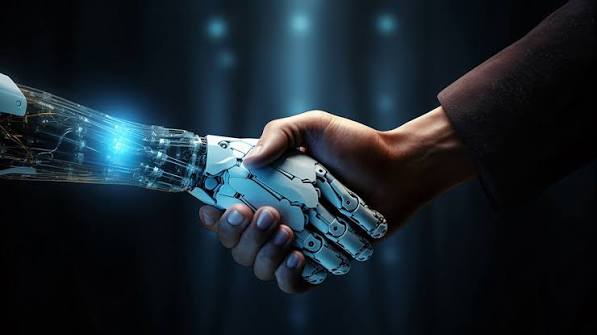
What happens when human creativity and AI intelligence work together?
AI can increase speed and scale. Humans bring context, emotion, judgement, cultural understanding, lived experience, and a distinct point of view.
And in a digital environment where content is becoming easier to produce, having something meaningful and distinctive to say may matter even more.
HubSpot’s 2026 State of Marketing reports that 86.4% of marketing teams use AI in at least some areas, while 73.4% of surveyed marketers see AI working alongside marketers rather than replacing them.
The opportunity isn’t AI vs humans.
It is AI + human creativity.
What Does AI Bring to Marketing?
AI is particularly useful when marketers need to handle repetitive, data-heavy, or high-volume work.
It can help with:
Brainstorming
Content ideation
Copy variations
Image generation
Video production
Audience analysis
Personalisation
Ad optimisation
Content repurposing
Research
Translation
Automation
Performance analysis
HubSpot’s 2026 research identifies content creation, media creation, advertising optimisation, administrative automation, brainstorming, and strategic planning among common AI applications in marketing.
This creates a major advantage:
AI can help marketers move from one idea to many executions much faster.
But speed isn’t the same as creativity.
What Does Human Creativity Bring?
Human creativity is about more than producing something new.
It involves understanding:
Why should this idea exist?
Who is it for?
What should the audience feel?
What does this brand stand for?
What makes this idea different?
Will people actually care?
Humans bring:
Emotion
Cultural understanding
Personal experience
Intuition
Context
Empathy
Strategic judgement
Brand perspective
Original storytelling
Taste and discernment
These qualities become especially important when a brand is trying to create a memorable identity.
AI can generate ten campaign ideas.
A marketer still needs to decide:
Which idea actually belongs to this brand?
1. AI Can Generate Ideas. Humans Give Them Meaning.
Imagine a business wants to launch a campaign around a new product.
You could ask AI:
“Give me 20 campaign ideas.”
Within seconds, you may receive 20 possibilities.
That’s useful.
But an idea becomes powerful when it connects with:
The audience
The brand story
The product
The market
The cultural moment
The customer’s emotions
AI can help open the creative door.
Human thinking decides which door is worth walking through.
2. AI Is Excellent at Scale
Suppose a brand has one campaign idea.
The campaign needs:
Instagram posts
Reels
LinkedIn posts
Email copy
Website content
Ad variations
Short videos
Different audience versions
Creating all of this manually can take significant time.
AI can help marketers adapt the central idea into multiple formats.
One strategic idea can become:
1 campaign
↓
5 content formats
↓
20 variations
↓
Multiple audience segments
↓
Multiple platforms
This is where AI becomes extremely valuable.
The human team can spend more time developing the core idea instead of repeatedly recreating the same execution.
3. AI Can Personalise Content
Traditional marketing often creates one message for a broad audience.
AI makes it easier to create variations for different audiences.
For example, a software company might communicate differently with:
Startup founders
Focus on speed and affordability.
HR managers
Focus on efficiency and employee management.
Enterprise businesses
Focus on scalability, security and integration.
The underlying brand remains the same.
But the communication can change based on the audience.
Personalised content is already one of the major AI-related marketing trends identified in HubSpot’s 2026 research.
4. Humans Protect the Brand Voice
One of the biggest risks of using AI at scale is sameness.
If every brand uses AI to generate content without strong creative direction, the internet can become filled with content that sounds almost identical.
Same:
Hooks
Phrases
Structures
Visual styles
Marketing language
Emotional claims
AI can make content faster.
But without a clear brand voice, it can also make brands sound less distinctive.
This is why human creative direction matters.
A marketer needs to define:
How does our brand speak?
Are we:
Bold?
Warm?
Playful?
Technical?
Minimal?
Conversational?
Premium?
Educational?
AI can follow the direction.
Humans need to establish the direction.
5. AI Can Analyse Data. Humans Interpret It.
Marketing generates enormous amounts of data.
For example:
Click-through rates
Engagement
Conversion rates
Website traffic
Audience behaviour
Ad performance
Customer journeys
Search behaviour
AI can help identify patterns quickly.
But data doesn’t automatically explain why something happened.
Imagine a campaign suddenly gets lower engagement.
AI may identify:
“Engagement dropped by 22%.”
But a marketer still needs to investigate:
Was the message wrong?
Did the audience change?
Was the creative too generic?
Did the topic become less relevant?
Did competitors change their positioning?
Did the brand lose its distinctiveness?
AI can surface the signal. Human judgement gives the signal context.
6. AI Can Make Creative Testing Faster
Creative testing is another area where AI can help.
Instead of producing one advertisement, marketers can develop multiple variations of:
Headlines
Visuals
CTAs
Offers
Formats
Copy lengths
Audience messages
These can then be tested against actual performance.
The process becomes:
Human idea
↓
AI-assisted variations
↓
Audience testing
↓
Performance data
↓
Human interpretation
↓
Creative refinement
This creates a continuous creative learning cycle.
7. Human Creativity Creates Emotional Connection
People don’t always remember information.
They remember:
Stories
Experiences
Emotions
People
Moments
Surprising ideas
Relatable situations
A brand isn’t built only through product descriptions.
It is built through the meanings people attach to the brand.
This is one reason human-led creativity remains important as AI-generated content increases.
Gartner reported in 2026 that consumers are placing increased importance on real people and credibility signals in an environment where AI-generated content is becoming more common.
The implication for marketers is important:
When content becomes abundant, authenticity can become more valuable.
8. AI Can Help Bring Creative Ideas to Life
Human creativity isn’t always limited by ideas.
Sometimes it’s limited by resources.
You may have a concept for:
A campaign visual
A product scene
A video sequence
A storyboard
A social post
An animation
But producing it traditionally may require:
Designers
Videographers
Editors
Photographers
Production teams
Multiple rounds of revisions
AI can help marketers visualise and prototype ideas much faster.
This doesn’t necessarily replace the creative team.
Instead, it can reduce the distance between:
“I have an idea.”
and
“I can see what this idea could look like.”
Adobe’s 2026 creative research similarly describes AI tools as enabling marketers to generate, iterate and scale creative work faster while highlighting the growing importance of authentic human connection.
9. Human Creativity Defines the Brand Point of View
One of the most important things AI cannot automatically provide is a meaningful brand point of view.
A brand needs to have something to say.
Not just:
“We provide quality services.”
But:
What do we believe?
What do we want to change?
What do we want customers to remember?
What perspective do we bring to our industry?
HubSpot’s 2026 marketing research describes brand point of view as increasingly important as AI increases the amount of content available.
This is a crucial distinction.
AI can help you communicate your point of view.
It shouldn’t be responsible for inventing the entire point of view.
10. AI Should Handle Repetition. Humans Should Handle Direction.
A simple way to think about the division of work is:
AI Can Help WithHumans Should LeadContent variationsBrand strategyData analysisCreative directionResearchBrand positioningRepurposingStorytellingFirst draftsFinal judgementPersonalisationEmotional connectionAutomationAudience understandingTestingCultural contextProduction assistanceBrand voicePerformance patternsStrategic decisions
This isn’t a rigid rule.
The exact balance will differ by team and business.
But the principle is useful:
Automate repetition. Protect imagination.
11. Don’t Use AI Just to Create More Content
This is one of the biggest mistakes marketers can make.
If AI allows your team to create 100 pieces of content instead of 10, that doesn’t automatically mean your marketing became better.
It could simply mean you created more content.
And more content isn’t necessarily more valuable.
Gartner’s 2026 research has highlighted the growing importance of distinctive, trustworthy positioning as AI increases content abundance.
The better question is:
Did the additional content create more value?
Did it:
Educate?
Entertain?
Build trust?
Generate demand?
Strengthen the brand?
Improve customer experience?
Generate leads?
Increase retention?
If not, production speed doesn’t solve the underlying marketing problem.
12. The New Creative Skill: Knowing What Not to Automate
As AI becomes more capable, marketers may need to become better at deciding where human involvement matters most.
For example:
Automate:
First-draft variations
Basic research
Data sorting
Transcription
Repurposing
Routine reporting
Keep strong human involvement:
Brand positioning
Campaign concept
Sensitive communication
Cultural messaging
Brand storytelling
Final creative decisions
Customer insight
Reputation-sensitive content
The goal isn’t maximum automation.
The goal is meaningful automation.
13. Strong Brands Need Both Consistency and Freshness
A brand needs consistency.
But too much consistency can become predictable.
AI can help maintain consistency across:
Tone
Formatting
Visual systems
Messaging
Content variations
Multiple platforms
Human creativity can introduce:
New ideas
Unexpected stories
Cultural relevance
Fresh perspectives
Campaign concepts
Emotional depth
Together, they can create a balance:
Consistent enough to be recognisable.
Creative enough to remain interesting.
14. AI Changes the Role of the Marketer
The marketer of the future may spend less time simply producing individual pieces of content.
Instead, the role increasingly involves:
Strategist
↓
Creative director
↓
AI collaborator
↓
Data interpreter
↓
Brand guardian
↓
Customer storyteller
The ability to write a caption or design a post still matters.
But increasingly, marketers need to understand:
Why this idea?
Why this audience?
Why this channel?
Why this message?
Why now?
That strategic thinking becomes more valuable when production itself becomes faster.
15. Build an AI + Human Creative Workflow
Businesses can create a simple workflow that combines both strengths.
Step 1 — Human insight
Identify the customer problem, tension, opportunity or story.
Step 2 — Human strategy
Define the objective, audience and brand message.
Step 3 — AI exploration
Generate multiple ideas, angles, formats or executions.
Step 4 — Human selection
Choose the ideas that genuinely fit the brand.
Step 5 — AI production support
Create variations, repurpose content and accelerate production.
Step 6 — Human refinement
Add personality, emotion, experience and brand voice.
Step 7 — Audience testing
Measure how people respond.
Step 8 — Human interpretation
Understand what the results actually mean.
Step 9 — Optimisation
Use both performance data and creative judgement to improve the next campaign.
This turns AI from a content generator into a creative partner.
16. Don’t Forget Trust and Transparency
As AI becomes more visible in marketing, brands also need to think about transparency.
If AI is materially involved in creating an experience, marketers should consider whether and how that use should be communicated, particularly when authenticity or trust is central to the interaction.
Gartner’s 2026 research has highlighted transparency and clear human points of view as important considerations for maintaining trust in an AI-saturated marketing environment.
The goal isn’t to hide AI.
It is to make sure AI supports the brand experience rather than undermining it.
17. What This Means for Small Businesses
You don’t need a large marketing department to benefit from the combination of AI and human creativity.
A small business could use AI to:
Brainstorm content
Research customer questions
Create content variations
Repurpose videos
Analyse campaign performance
Draft email campaigns
Generate creative concepts
Organise marketing workflows
But the business owner or marketer still provides something extremely important:
Real business experience.
They know:
What customers actually ask
What problems customers face
What objections they have
What stories happen inside the business
What makes the company different
What the team believes in
That information can make AI-assisted content far more distinctive.
18. The Future Isn’t AI vs Human Creativity
The debate is often framed as:
AI vs Humans
But that may be the wrong comparison.
The stronger model is:
Human creativity + AI capability
AI can help marketers:
Think faster.
Test more.
Create at scale.
Personalise better.
Analyse faster.
Humans can help brands:
Think deeper.
Feel more.
Tell better stories.
Make better decisions.
Build trust.
Stand for something.
That combination can create a stronger marketing system.
Final Thoughts
AI is changing the economics and speed of content creation.
But when everyone can create content faster, content alone becomes less of a differentiator.
The real competitive advantage can come from:
Strong ideas
Distinctive positioning
Human insight
Original storytelling
Brand personality
Trust
Strategic thinking
Meaningful customer connections
AI can help a brand create more.
Human creativity helps decide what is worth creating.
And that may be the most important creative skill for marketers in 2026:
Don’t just ask AI to create. Give it something worth creating.
AI provides the acceleration. Human creativity provides the direction. Strong brands need both.
#AIMarketing #HumanCreativity #DigitalMarketing #GenerativeAI #AIinMarketing #BrandStrategy #BrandBuilding #CreativeMarketing #ContentMarketing #MarketingStrategy #BrandStorytelling #DigitalStrategy #LevelUpDigitalStudios