
 Post by
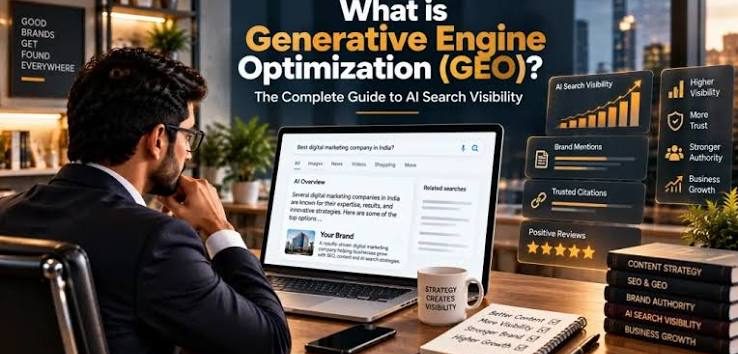
Generative Engine Optimization (GEO) is becoming an important part of digital marketing as people increasingly use AI-powered platforms to discover information, compare services and find businesses.
Traditional SEO focuses on improving a website’s visibility in search engine results. GEO takes this a step further by helping a brand’s content become more useful, understandable and discoverable by AI-powered search experiences.
For businesses, this creates a new opportunity: visibility is no longer only about appearing in search results. It is also about becoming a credible source that AI platforms may reference when answering users’ questions.
What Is Generative Engine Optimization (GEO)?
Generative Engine Optimization (GEO) is the process of improving digital content so that it has a better chance of being understood, selected, referenced or cited by AI-powered search and answer platforms.
These platforms use generative AI to provide conversational answers instead of simply displaying a list of website links. Examples include Google’s AI-powered search experiences, ChatGPT search and Perplexity.
When someone asks an AI platform a question such as “Which digital marketing agency can help a small business build its online presence?”, the platform may generate an answer using information gathered from multiple sources.
GEO focuses on making your brand’s online information clear, relevant, trustworthy and easy for these systems to interpret.
How Does GEO Work?
Generative AI platforms do not always respond to a search query by showing traditional website rankings. Depending on the platform and query, they may retrieve information from online sources, analyse relevant content and combine information to create a conversational response.
A simplified GEO process involves four stages:
Understanding the user’s query: AI systems interpret the question, its context and the type of information the user needs.
Finding relevant information: The platform may retrieve information from websites and other accessible sources that match the query.
Evaluating content: It analyses relevance, clarity, usefulness and other quality signals to identify information that can support its response.
Generating an answer: The system combines information from selected sources into a response. Some platforms also display links or citations to the sources used.
The exact process varies between platforms, and businesses cannot directly control which sources an AI system selects. However, publishing reliable, well-organised and relevant content can improve the opportunity for a brand’s information to be discovered and referenced.
Google for Developers+2
Why Is GEO Important for Businesses?
Customer search behaviour is evolving. Instead of typing only short keywords into search engines, people increasingly ask detailed questions through AI-powered platforms.
For example, a business owner may ask:
Which branding agency can help a startup build its identity?
What digital marketing services are suitable for a small business?
How can a company improve its online visibility in Kerala?
When AI platforms respond to these questions, businesses that have a clear and credible online presence may have more opportunities to be discovered.
GEO can support businesses by helping them:
Improve AI search visibility: Increase opportunities for brand information to appear in AI-generated answers.
Build brand authority: Publish useful information that demonstrates knowledge and expertise.
Reach relevant audiences: Create content that addresses specific customer needs and search intent.
Strengthen online credibility: Maintain consistent and accurate information across relevant digital platforms.
Support customer discovery: Help potential customers find and understand a business while researching solutions.
GEO does not guarantee that an AI platform will mention or recommend a particular business. It is a long-term visibility strategy rather than a guaranteed ranking method.
Key Strategies to Improve GEO
1. Create Helpful, Question-Based Content
AI-powered search experiences often respond to specific questions. Businesses should create content that directly addresses the questions their target customers are asking.
For example, instead of publishing only a general article about digital marketing, a business can cover topics such as:
How can a small business generate leads online?
What should a company look for in a digital marketing agency?
How does social media marketing support business growth?
Providing clear answers, practical explanations and relevant examples makes content more useful to readers and easier to understand.
2. Focus on Original and Trustworthy Information
Publishing generic articles that repeat information already available online may not help a business stand out.
Instead, create content based on actual industry knowledge, professional experience, customer insights, original research and practical examples.
Include accurate facts, relevant statistics and supporting references wherever appropriate. Original and reliable information gives readers a stronger reason to trust your content.
3. Organise Website Content Clearly
A well-structured website helps visitors understand information and supports search engines and AI systems in interpreting page content.
Use:
Clear H1, H2 and H3 headings.
Short, meaningful paragraphs.
Descriptive page titles and meta descriptions.
Relevant internal links.
Useful lists and comparison tables where appropriate.
Clear service descriptions and contact information.
A logical content structure improves readability and makes important information easier to find.
4. Strengthen Your Website’s SEO Foundation
GEO and SEO should not be treated as completely separate strategies. Traditional SEO practices remain important for improving website discovery and eligibility in search experiences that use AI.
Businesses should focus on:
Making important pages accessible to search engine crawlers.
Improving website speed and mobile usability.
Maintaining relevant keywords and search intent.
Building a clear internal linking structure.
Using appropriate structured data where relevant.
Publishing useful and regularly maintained content.
Google confirms that its AI search experiences continue to rely on foundational SEO practices. It also clarifies that there is no special GEO schema or additional markup required to appear in its AI search features.
Google for Developers+1
5. Build Brand Presence Beyond Your Website
A business’s online identity is not limited to its own website. Its presence across relevant industry platforms, business directories, publications, review platforms and social media can help customers discover and evaluate the brand.
Maintain consistent business details, publish meaningful updates and encourage genuine customer reviews.
Focus on credibility and relevance rather than trying to collect mentions from unrelated websites.
6. Use Specific Facts and Clear Business Information
AI systems and potential customers need to understand exactly what a business offers.
Make sure your website clearly explains:
What products or services you provide.
Who your services are designed for.
Which locations or markets you serve.
What makes your business different.
How customers can contact you.
For example, a digital marketing agency should explain its services, target industries, service locations and approach instead of relying only on broad statements such as “We help businesses grow.”
7. Monitor Your AI Search Visibility
GEO requires ongoing observation because AI-generated answers can change depending on the platform, query and available sources.
Businesses can regularly test relevant customer questions across platforms such as ChatGPT, Perplexity and Google’s AI search experiences.
Review whether the brand is mentioned, whether its website is cited, which competitors appear and whether the information presented is accurate.
Use these findings to identify content gaps and improve the website. Treat individual AI responses as observations, not guaranteed rankings or a complete measurement of performance.
GEO vs SEO: What Is the Difference?
Although both strategies aim to improve online visibility, they focus on different search experiences.
| Traditional SEO | Generative Engine Optimization |
|---|---|
| Focuses on search engine visibility and rankings | Focuses on visibility in AI-generated answers |
| Targets keywords and search queries | Targets questions, context and user intent |
| Aims to improve organic search traffic | Aims to increase brand mentions and source citations |
| Optimises web pages for search engines and users | Makes brand information useful and accessible to AI-powered systems |
| Often measures rankings, clicks and organic traffic | Can monitor mentions, citations and referral traffic |
The important point: GEO does not replace SEO. Both strategies work together to support a business’s overall digital visibility.
Common GEO Mistakes Businesses Should Avoid
As GEO becomes more popular, businesses may be tempted to follow shortcuts that promise instant visibility. However, sustainable results require a focus on content quality and credibility.
Some common mistakes include:
Publishing large volumes of generic AI-generated articles without adding original value.
Repeating keywords unnaturally throughout website content.
Creating unnecessary pages for minor keyword variations.
Adding irrelevant backlinks or artificial brand mentions.
Ignoring technical SEO and website accessibility.
Treating AI-generated answers as fixed rankings.
Expecting immediate results from GEO activities.
Google’s guidance emphasises original, helpful, people-first content rather than tactics designed only to manipulate AI responses.
Google for Developers+1
How LevelUp DTS Helps Businesses Improve Their Digital Visibility
At LevelUp DTS, we believe building a strong digital presence requires more than simply publishing content or maintaining social media accounts. Businesses need a clear strategy that connects their brand identity, website, content and digital marketing activities.
Our approach focuses on helping businesses strengthen their online presence through:
SEO and Website Optimisation: Improving website structure, content relevance and search engine visibility.
Content Strategy: Developing informative, audience-focused content that answers customer questions.
Branding and Identity Development: Creating a consistent brand identity across digital platforms.
Social Media Marketing: Building brand awareness and meaningful audience engagement.
Website Development: Creating professional, user-friendly websites with clear business information.
Digital Marketing Strategy: Connecting different digital channels to support long-term business growth.
By combining these services, businesses can build a stronger digital foundation for both traditional search and emerging AI-powered discovery experiences.
Conclusion
Generative Engine Optimization is changing how businesses approach online visibility. As customers increasingly use AI-powered platforms to find information and compare solutions, brands need to make their digital content more useful, trustworthy and accessible.
GEO is not about finding shortcuts to appear in AI-generated answers. It is about building a credible online presence through quality content, strong SEO foundations, clear brand information and consistent digital communication.
Businesses that start adapting their digital strategies today can be better prepared for the changing ways people discover brands online.
Your business deserves to be found, understood and remembered — across every digital search experience.
At LevelUp DTS, we help businesses build stronger digital identities and create strategies for sustainable online growth.
You Build the Business. We Build the Brand.