
 Post by
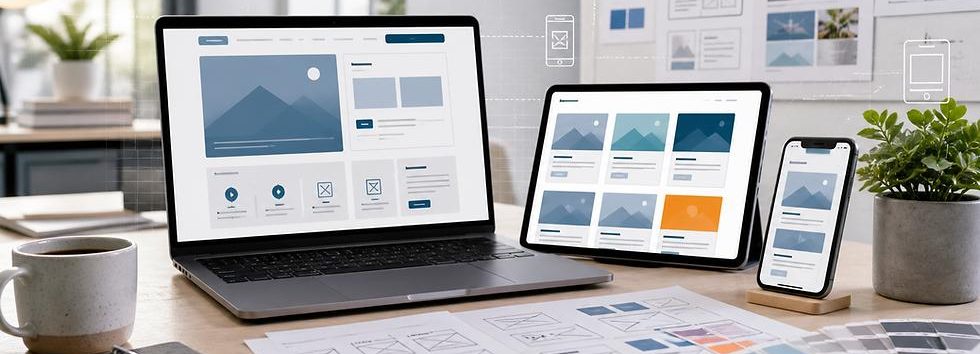
A website is more than just the digital face of a business. It is often the first place potential customers visit to understand your brand, explore your services, and decide whether they can trust you.
But as businesses grow, their websites may no longer reflect their current goals, services, or customer expectations. The design might feel outdated, the pages may load slowly, or visitors might struggle to find the information they need.
That is when a website redesign becomes worth considering.
However, redesigning a website is not simply about changing colours, updating layouts, or following the latest design trends. A successful redesign starts with understanding what is working, what is not, and what your business actually needs to improve.
Before investing in a website redesign, here are the key factors every business should evaluate.
1. Identify What Is Not Working on Your Current Website
Before planning a new design, take a closer look at your existing website.
Ask yourself a few important questions:
- Are visitors finding the information they need easily?
- Are your service pages clear and informative?
- Is the website generating enquiries or leads?
- Do visitors leave without taking any action?
- Does the website accurately represent your current business?
Reviewing these areas helps you identify the actual problems instead of making changes based on assumptions.
For example, if visitors regularly visit your service pages but do not submit enquiries, the problem might be unclear messaging, weak calls to action, or a complicated contact process rather than the overall design.
The goal is to solve the right problem, not simply create a different-looking website.
2. Check Whether Your Website Reflects Your Current Brand
Businesses evolve. Your services, target audience, positioning, and brand identity may have changed significantly since your website was first developed.
Your website should communicate what your business stands for today.
Check whether your current website has:
- Consistent brand colours, fonts, and visual elements.
- Clear messaging that explains what your business offers.
- Updated service descriptions and company information.
- A professional appearance that aligns with your brand positioning.
- Consistency across your website and other digital platforms.
If your business has expanded its services or repositioned itself in the market, an outdated website can create a disconnect between what customers see online and what your business actually delivers.
A redesign is an opportunity to bring your digital presence in line with your current brand identity.
3. Evaluate the User Experience (UX)
A visually attractive website is not necessarily an effective one.
Visitors should be able to navigate your website naturally, understand your offerings, and find the information they need without unnecessary effort.
Evaluate your website from a customer’s perspective.
Can a first-time visitor understand your business within a few seconds? Can they find your services without clicking through multiple unnecessary pages? Is your contact information easy to locate?
Pay attention to:
- Navigation menus and page structure.
- Readability of text and headings.
- The placement of important information.
- Forms and enquiry processes.
- Clear calls to action.
- Accessibility and ease of use.
A confusing user experience can discourage potential customers, even when your business offers excellent services.
When redesigning your website, prioritise simplicity, clarity, and convenience.
4. Make Mobile Responsiveness a Priority
Many customers discover businesses through their smartphones. If your website is difficult to use on a smaller screen, you could be creating unnecessary barriers for potential customers.
Check how your website performs across different devices.
Are the text and images displayed properly? Do buttons have enough space to be tapped easily? Do forms work smoothly on mobile? Does the navigation remain simple?
A mobile-friendly website should provide a consistent experience across smartphones, tablets, laptops, and desktop screens.
During a redesign, avoid treating mobile responsiveness as a final adjustment. It should be considered from the beginning of the design process.
5. Review Website Speed and Technical Performance
Website performance affects how people experience your business online.
Slow-loading pages, broken links, technical errors, and poorly optimised images can frustrate visitors and interrupt their journey.
Before redesigning, evaluate:
- Page loading performance.
- Image sizes and file formats.
- Broken links and error pages.
- Website security and HTTPS.
- Hosting and server performance.
- Core Web Vitals and other relevant performance indicators.
Tools such as Google PageSpeed Insights can help identify performance issues and opportunities for improvement.
However, a redesign does not automatically make a website faster. Poorly implemented code, oversized media, and unnecessary scripts can create the same problems in a brand-new website.
Technical performance should be planned, tested, and measured throughout the redesign process.
6. Assess Your Website’s SEO Before Making Changes
Search engine optimisation is one of the most important factors to consider before redesigning a website.
Your existing website may already attract visitors through search engines, rank for relevant keywords, and generate enquiries from organic traffic.
Changing the website structure without a proper SEO plan can put that visibility at risk.
Before making changes, review:
- Organic traffic and keyword rankings.
- High-performing landing pages.
- Existing URLs and internal links.
- Page titles and meta descriptions.
- Heading structure and relevant content.
- Image alt text and internal linking.
- XML sitemap and indexing status.
If URLs need to change, plan appropriate permanent redirects from old pages to their most relevant new destinations. Also check canonical tags, robots directives, and the new sitemap before launch.
Remember that a redesign should support your SEO strategy, not disrupt the visibility your business has already built.
7. Evaluate Your Website Content and Messaging
Design can attract attention, but content helps visitors understand your business.
During a website redesign, review whether your content is clear, relevant, accurate, and aligned with your customers’ needs.
Consider these questions:
- Does your homepage communicate your value proposition clearly?
- Are your services explained in language customers understand?
- Does your content address common customer questions?
- Are your contact details and business information up to date?
- Do your pages explain why customers should choose your business?
Avoid filling pages with generic statements that could describe any company in your industry.
Instead, focus on your specific services, customer challenges, expertise, and the value you provide.
You should also consider how people discover information through search engines and AI-powered search experiences. Clear headings, useful explanations, relevant business information, and well-structured content can help both users and search systems understand your website.
8. Define the Business Goals of the Redesign
A website redesign should have a clear business purpose.
Simply saying, “We need a modern website,” is not a measurable objective.
Instead, identify what you want the redesigned website to achieve.
For example:
- Generate more qualified enquiries.
- Improve service discovery.
- Increase appointment or consultation bookings.
- Strengthen brand credibility.
- Improve the customer journey.
- Support a new product or service launch.
- Make it easier for customers to contact your business.
Once your goals are clear, decide how you will measure progress.
Depending on your business, useful metrics may include conversion rate, qualified leads, form submissions, organic traffic, engagement with key pages, and mobile performance.
Clear objectives help guide design decisions and make it easier to evaluate whether the redesign delivers meaningful results.
9. Check Your Website’s Conversion Journey
Every website should make the next step clear.
Depending on your business model, visitors might want to request a quote, book a consultation, purchase a product, explore a service, or contact your team.
Review whether your website guides visitors towards these actions naturally.
Check that:
- Calls to action are clear and relevant.
- Contact forms request only necessary information.
- Important buttons are easy to find.
- Service pages explain the next step.
- Trust signals support customer confidence.
- The enquiry process works correctly.
For example, a service-based business may benefit from a clear “Request a Consultation” button on relevant service pages rather than relying entirely on a generic contact page.
A good conversion journey reduces confusion and helps interested visitors take action.
10. Consider Scalability and Future Business Needs
A website should support where your business is going, not just where it is today.
If you plan to introduce new services, publish regular blogs, expand into new markets, or integrate additional tools, your website should be able to accommodate those changes.
Before choosing a new platform or development approach, consider:
- How easily new pages and services can be added.
- Whether your team can update content independently.
- Integration with CRM systems, analytics, or enquiry tools.
- Security updates and ongoing maintenance.
- Future SEO and content requirements.
- Expected development and maintenance costs.
The right solution depends on your business requirements, available resources, and long-term plans.
A website that is easy to manage and adapt can reduce unnecessary redesign costs in the future.
11. Plan the Budget, Timeline, and Maintenance
Website redesign costs do not end when the new website goes live.
In addition to design and development, businesses should account for content creation, SEO, integrations, testing, hosting, security, and ongoing maintenance.
Before starting, clarify the project scope, deliverables, responsibilities, and timeline.
Make sure there is a plan for testing the website before launch and monitoring its performance afterwards.
It is also important to assign responsibility for future updates. Without regular maintenance, even a well-designed website can gradually develop outdated content, technical issues, or security vulnerabilities.
Planning these requirements early helps businesses make informed decisions and avoid unexpected costs.
12. Test Everything Before Launching
A website may look complete during development but still contain issues that affect real users.
Before launching the redesigned website, conduct a thorough review.
Check:
- Navigation links and buttons.
- Contact forms and enquiry notifications.
- Mobile and desktop layouts.
- Page speed and performance.
- Redirects from changed URLs.
- Search engine indexing settings.
- Analytics and conversion tracking.
- Security certificates and error pages.
- Content accuracy and spelling.
After launch, monitor traffic, search visibility, enquiries, and user behaviour to identify any problems quickly.
A website redesign should be treated as an ongoing improvement process rather than a one-time project.
Final Thoughts: Redesign With a Clear Strategy
A successful website redesign is not defined by how different your website looks. It is defined by how effectively it supports your business and serves your customers.
Before changing the design, understand your existing performance, clarify your business goals, evaluate your user experience, protect your SEO, and plan for future growth.
Every design decision should have a purpose.
When branding, content, technology, user experience, and business objectives work together, your website becomes more than an online presence. It becomes a valuable business asset that supports visibility, credibility, and growth.
At LevelUp DTS, we believe a website should do more than look good. It should communicate your brand clearly, create a better customer experience, and support your business goals.
Before you redesign your website, ask yourself one important question:
Are you redesigning your website just to make it look better, or to make your business perform better?